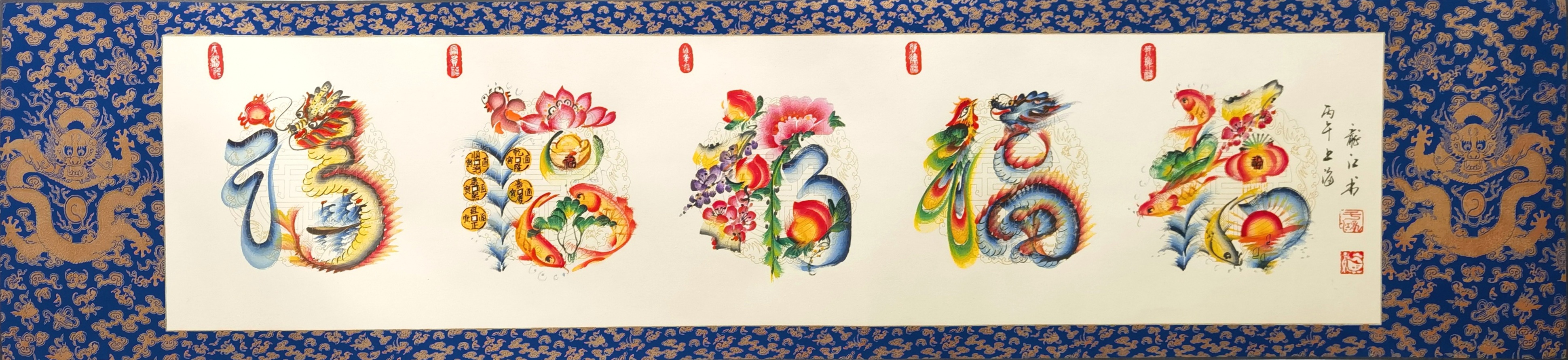
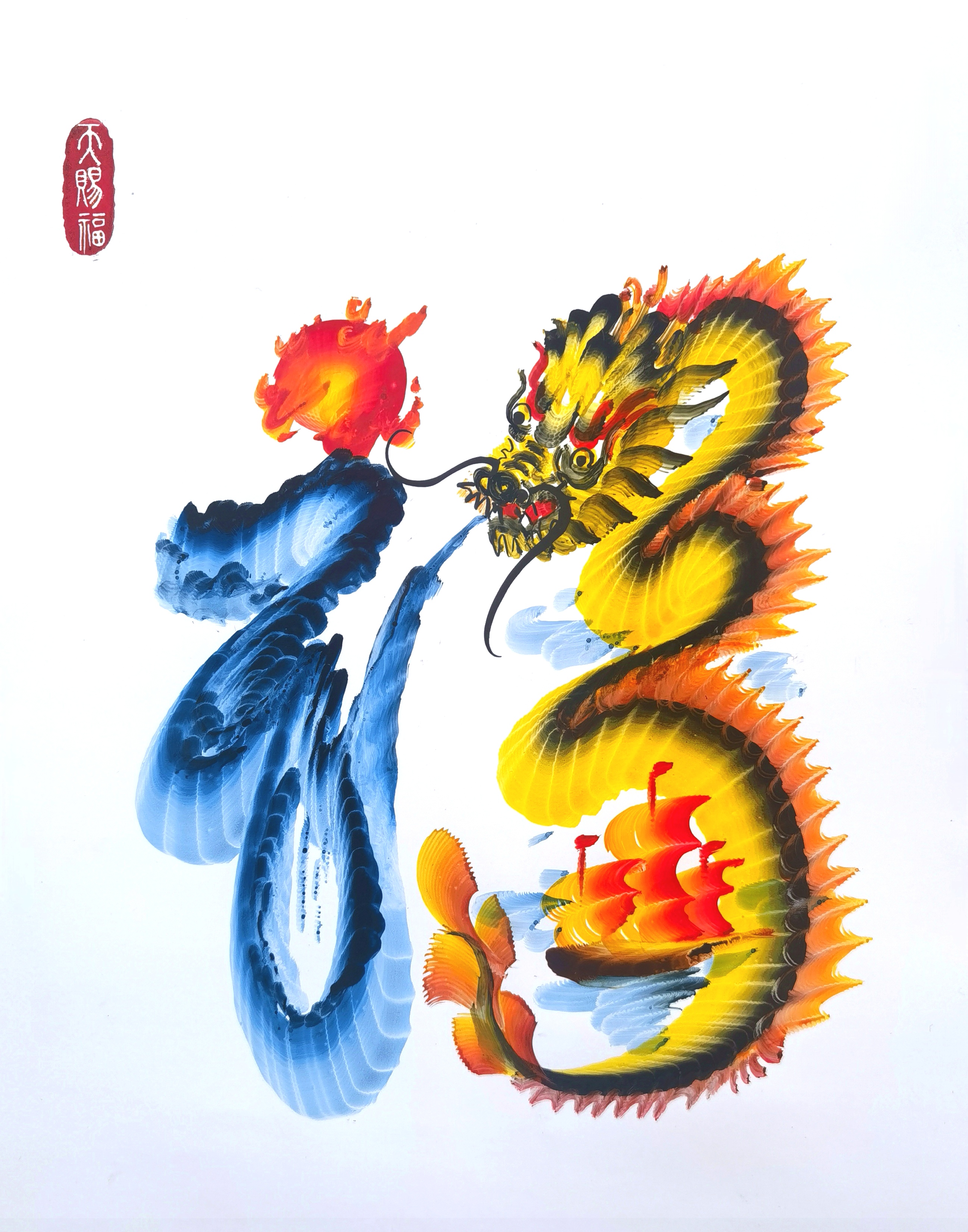
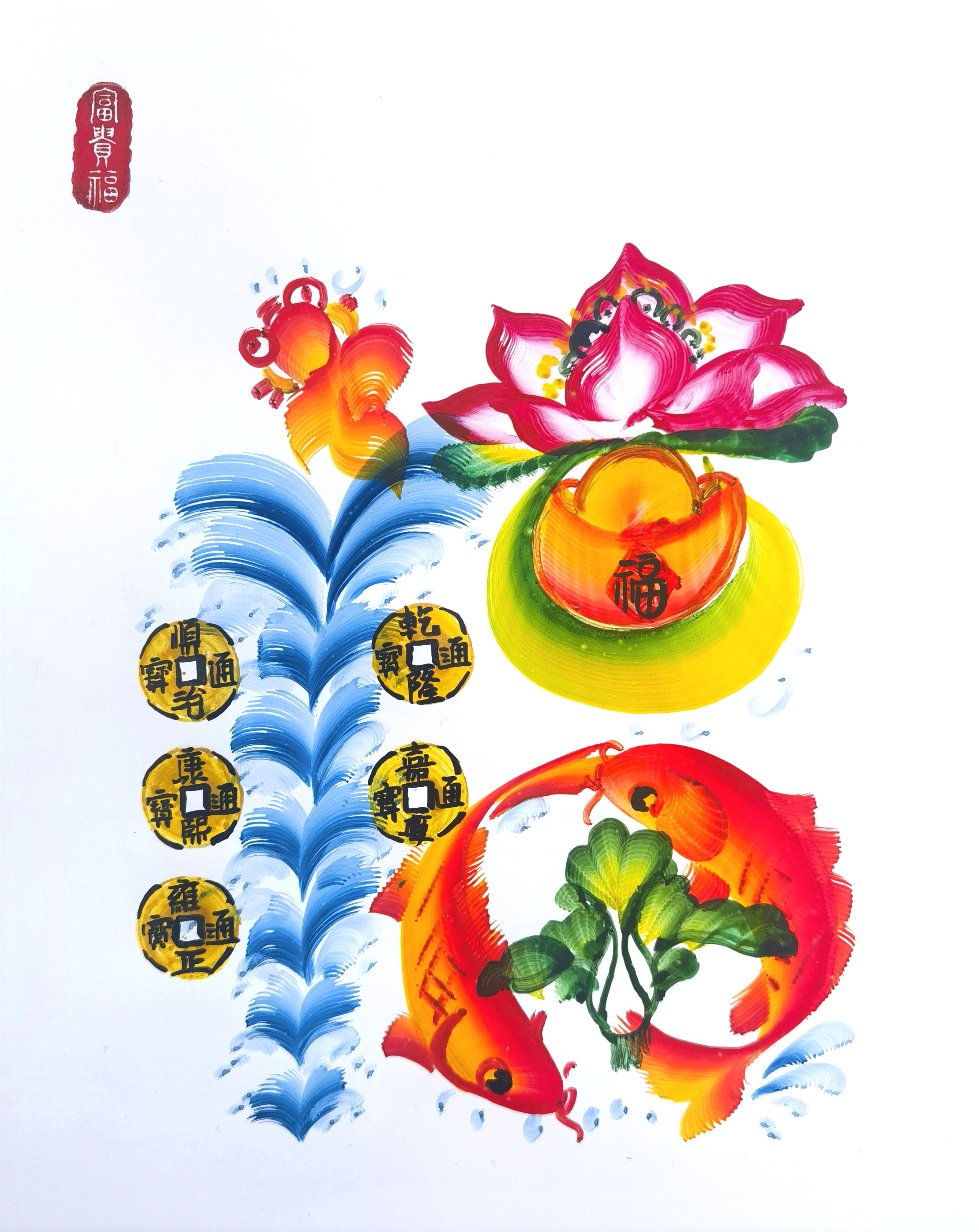
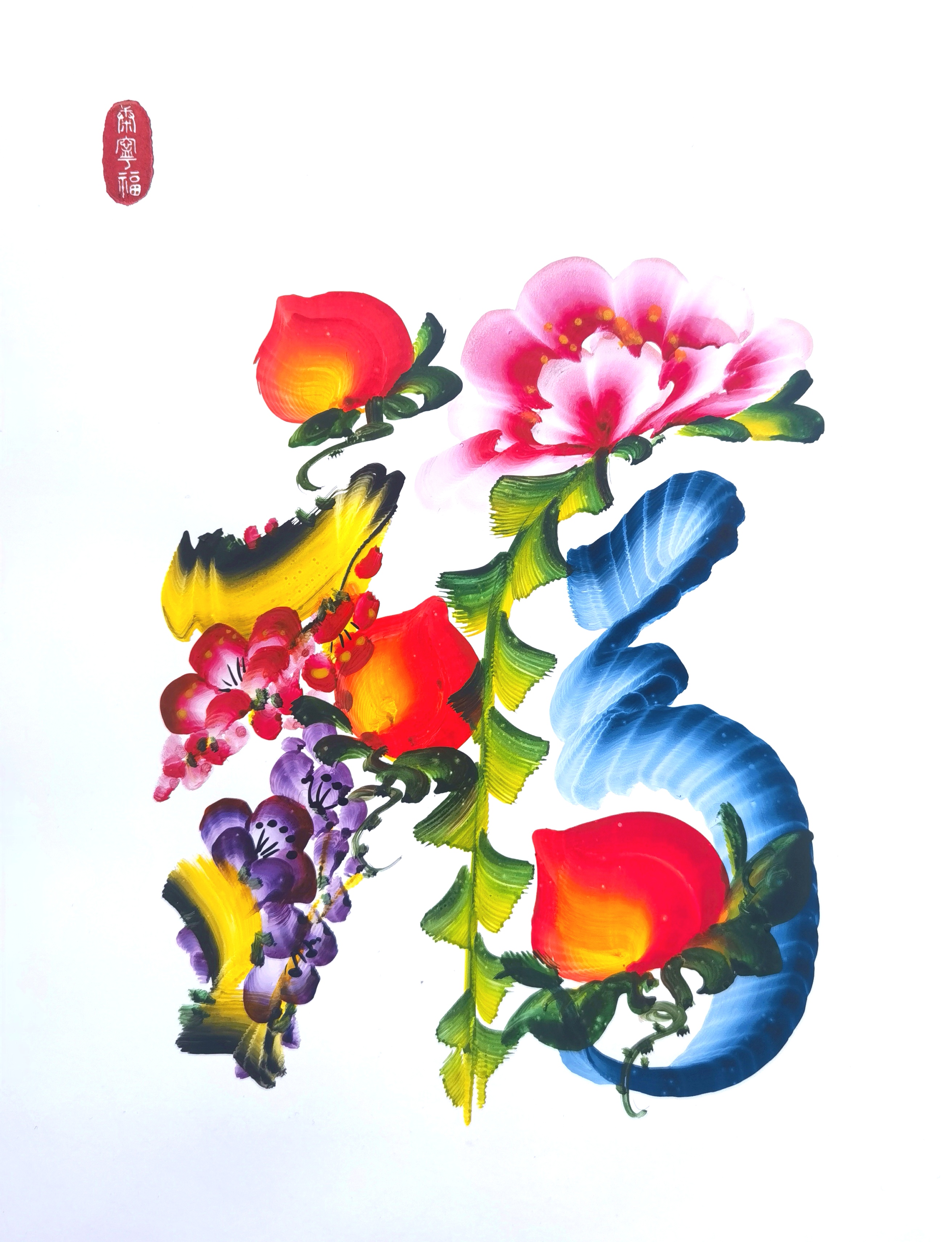
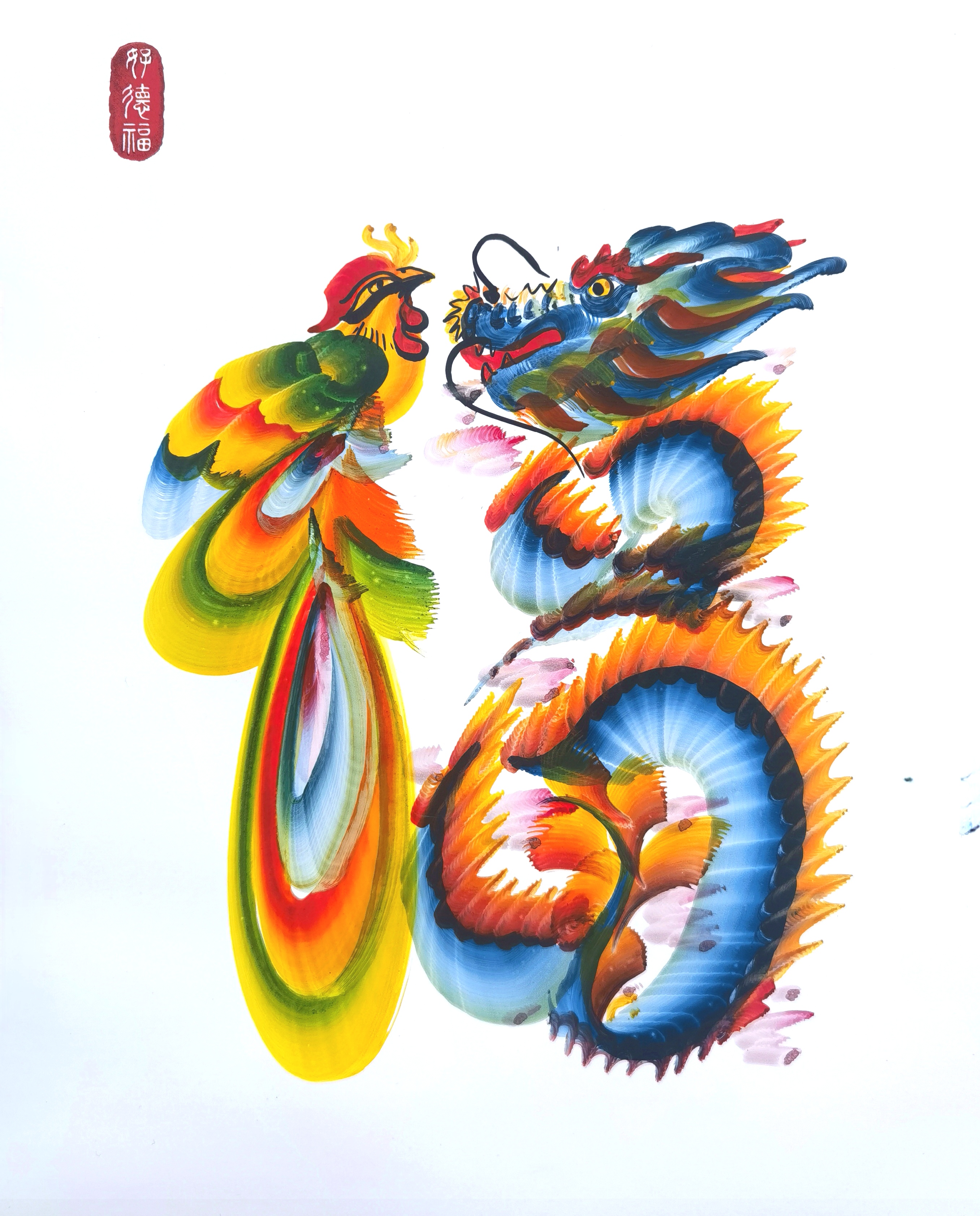
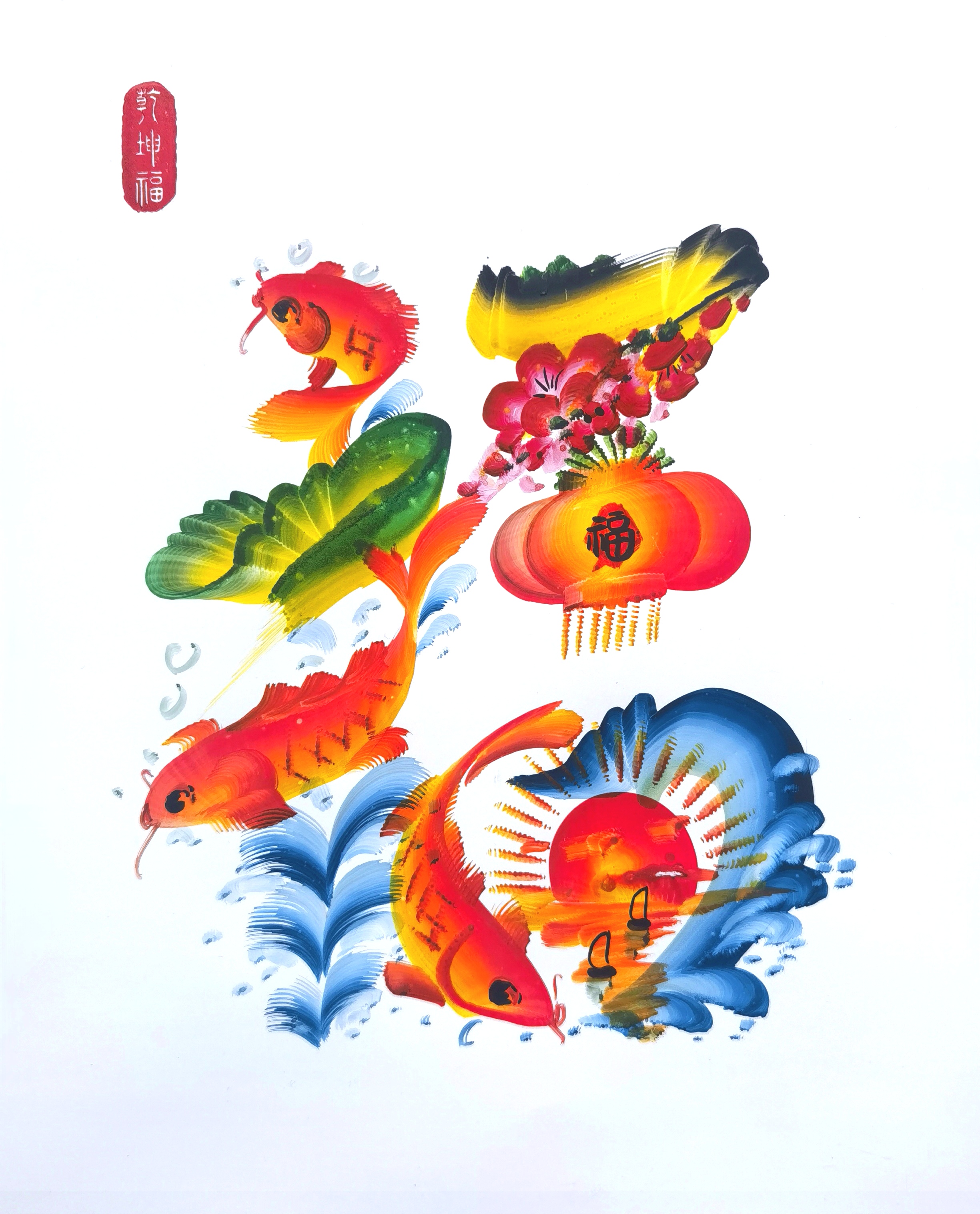
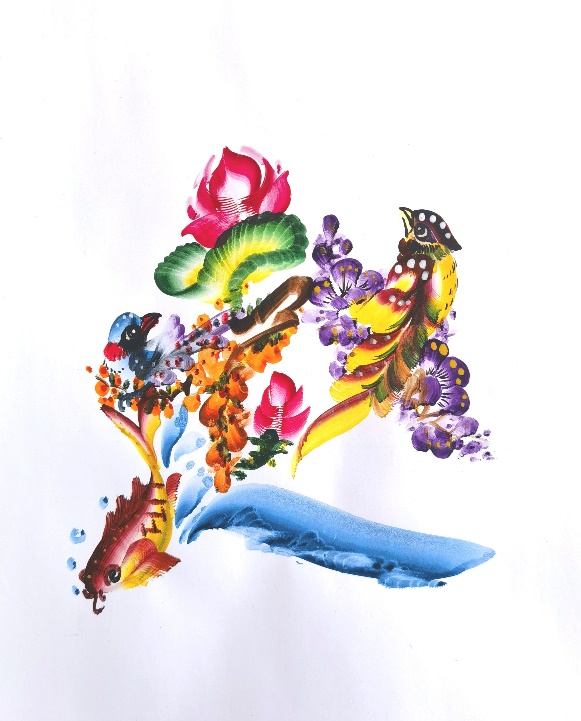
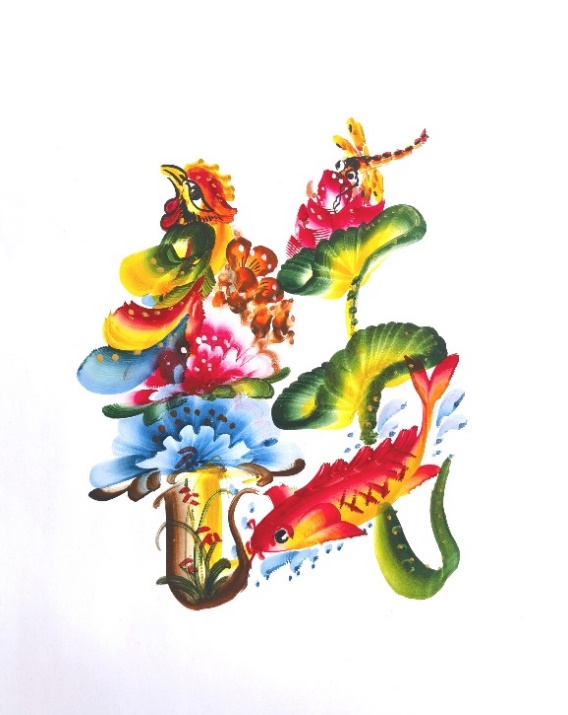
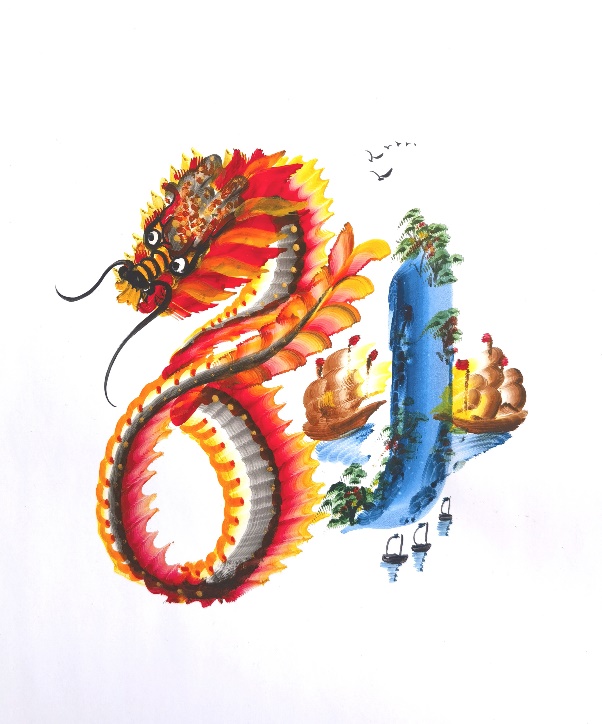
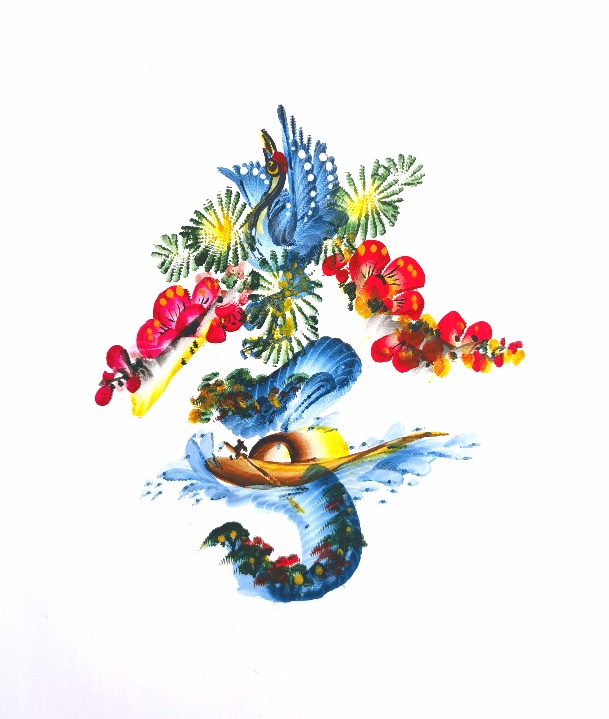
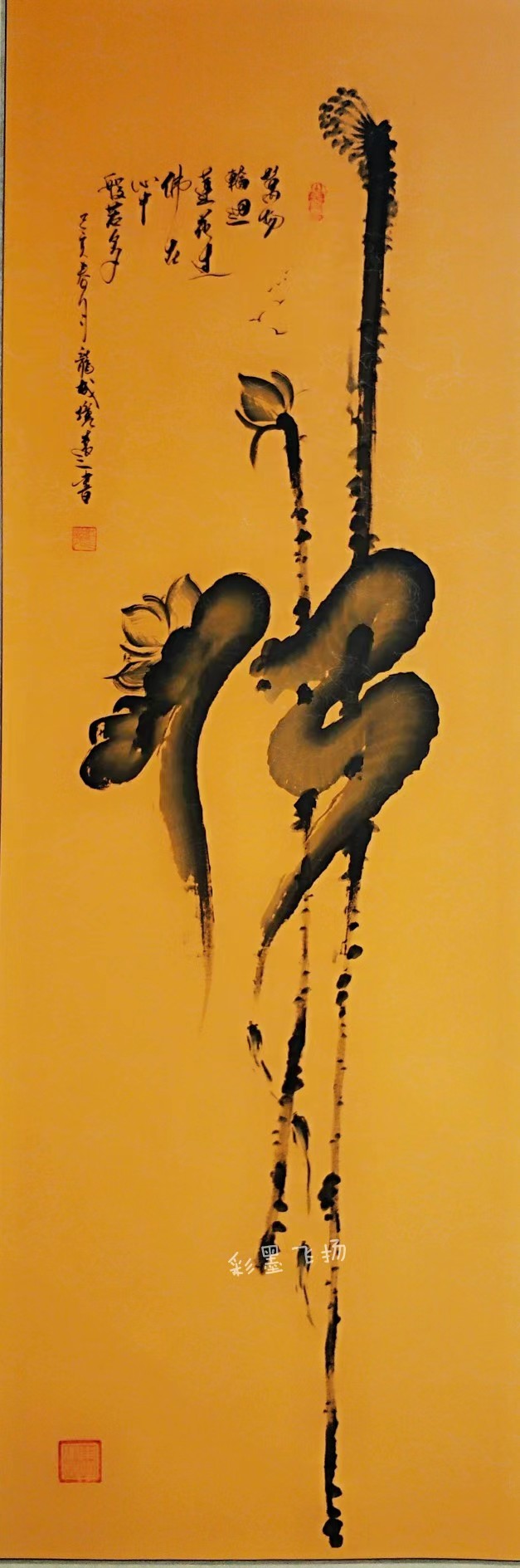
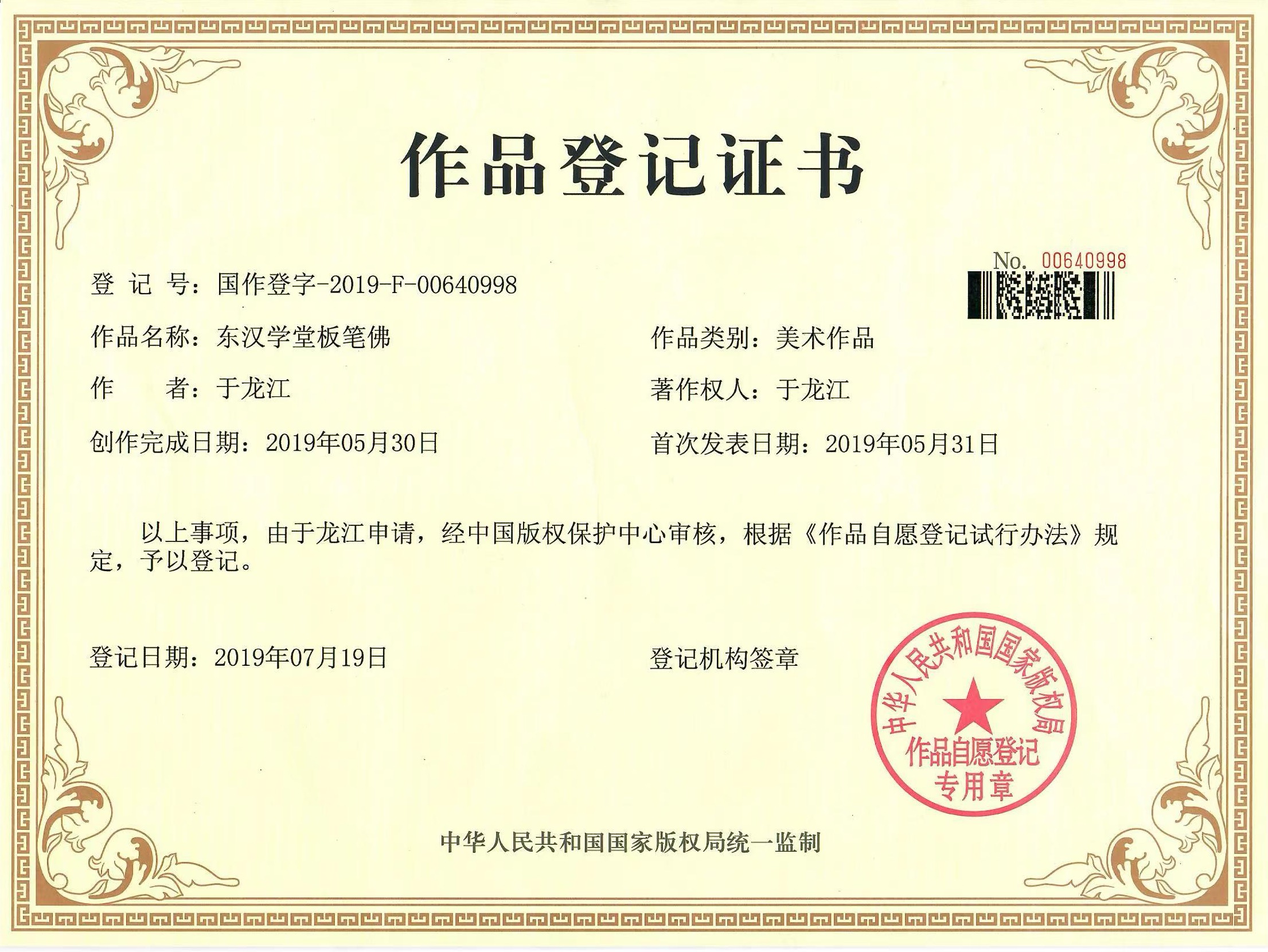
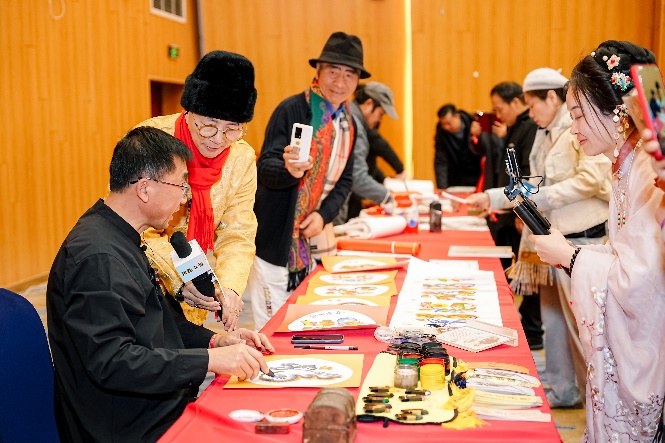
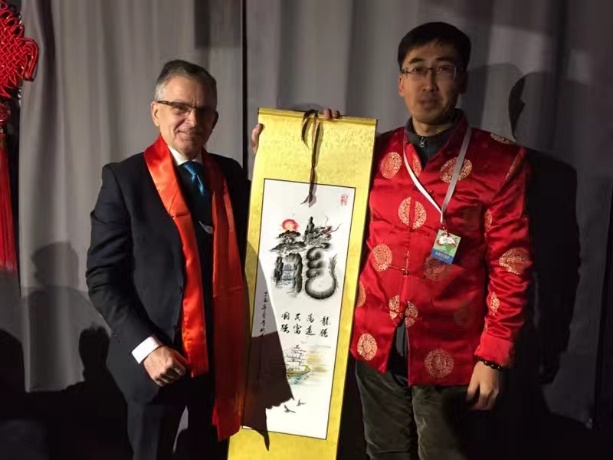
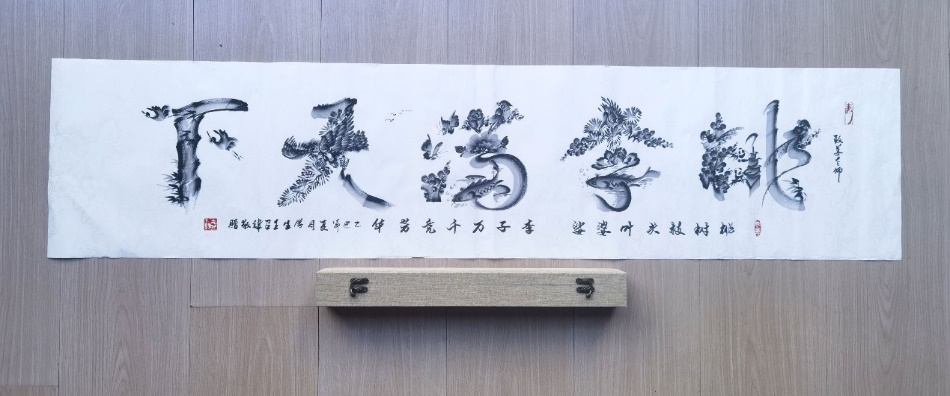
Traditional Banbi brush painting and calligraphy (Dragon Phoenix Flower Bird Calligraphy) evolved from ancient Feibai script, bird script, and artisan writing, with a history spanning over 1,800 years. During the Eastern Han Dynasty, the great scholar Cai Yong crafted brushes from bamboo and created the Banbi "Feibai script," which became the imperial court's exclusive calligraphic style.
Empress Wu Zetian, the only female emperor in Chinese history, incorporated bird imagery into characters to create bird script. Her "Monument of the Crown Prince Ascending to Immortality" features over a dozen charming, lively birds within just six characters, becoming a masterpiece celebrated through the ages.
By the late Song Dynasty, the Feibai bird script had spread among the common people. Resourceful folk artisans integrated auspicious Chinese motifs into the art. Flying dragons, dancing phoenixes, flowers, birds, butterflies, and fish complemented each other delightfully, creating works that combined text, imagery, and symbolic meaning. So captivating that one never tires of viewing them, it is said that "even master calligraphers hesitate to begin, and skilled painters find it difficult to improve upon," making it a precious gem in the garden of Chinese cultural heritage.